
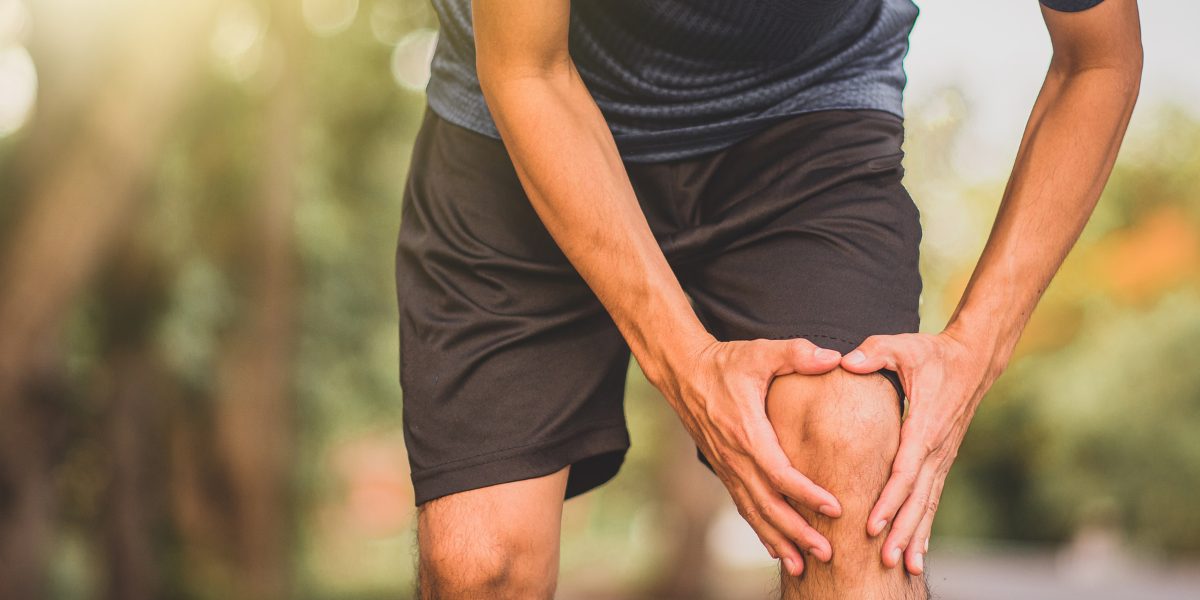
Spring is here — and so is the urge to get outside, walk the parks, tend the garden, and enjoy longer days. But for the nearly 60 million Americans living with arthritis, the transition from winter rest to spring activity can trigger a painful flare-up. If your knees are holding you back, this guide is for you. We’ll cover why spring makes knee pain worse, the breakthrough GAE procedure helping patients across New Jersey get back on their feet — without surgery, without opioids, and without downtime.
Why Spring Is the Toughest Season for Knee Pain
After months of cold weather and reduced movement, spring presents a unique challenge for anyone dealing with knee osteoarthritis or chronic joint pain. The sudden shift from sedentary winter habits to active outdoor living can overwhelm joints that haven’t been consistently supported by strong muscles.
During winter, reduced activity causes the muscles around the knee — particularly the quadriceps, hamstrings, and calves — to weaken. Cartilage becomes less lubricated. When you suddenly ramp up activity in spring, those deconditioned tissues struggle to absorb the increased forces, and your knees bear the brunt of it.
Common Spring Knee Pain Triggers
- Resuming walking or jogging routines too aggressively
- Tackling yard work or gardening with prolonged kneeling
- Hiking on uneven terrain after months indoors
- Barometric pressure changes that increase joint swelling
Did You Know? Research published in Arthritis & Rheumatology found that people with knee osteoarthritis who walked regularly were significantly less likely to develop new knee pain — 26% of walkers reported pain at follow-up compared to 37% of non-walkers. The key is consistent, gradual movement — not sudden bursts.
Understanding Knee Osteoarthritis — More Than Just “Wear and Tear”
Modern science tells a more complex story than simple “wear and tear.” Knee osteoarthritis involves an active inflammatory process driven by abnormal blood vessel growth in the joint lining, accompanied by new nerve growth that amplifies pain signals.
In a healthy knee, the synovial membrane is largely free of blood vessels. In osteoarthritis, pro-inflammatory factors trigger the growth of new, abnormal blood vessels into the synovium. These vessels bring nerve fibers that invade the normally nerve-free joint space. The result is a self-reinforcing cycle: inflammation breeds more blood vessels, which breed more nerves, which intensify pain.
This is exactly why traditional treatments — cortisone shots, gel injections, oral anti-inflammatories — often provide only temporary relief. They treat the symptoms but don’t address the underlying vascular problem.
Signs You May Have Knee Osteoarthritis
- Persistent swelling and stiffness that worsens with inactivity
- A grinding or crunching sensation when bending the knee
- Warmth or redness around the joint
- Pain that intensifies when climbing stairs or walking downhill
- Instability or the feeling that your knee might “give way”
- Reduced range of motion that limits everyday activities
“After two cortisone shots and months of physical therapy, I was still barely able to walk to my car. Dr. Shah’s team explained the GAE procedure clearly, and within 3 weeks I was back to my morning walks.”
— Margaret T., Nutley, NJ
What Is Genicular Artery Embolization (GAE)?
Genicular Artery Embolization is a minimally invasive, outpatient procedure rapidly gaining recognition as a game-changer for knee osteoarthritis patients. Unlike cortisone injections that temporarily mask pain, or knee replacement that requires major surgery and months of recovery, GAE targets the root cause of inflammatory knee pain — the abnormal blood supply feeding the inflamed joint tissue.
How GAE Works
- Step 1 — Evaluation: Your physician reviews imaging, medical history, and performs a physical exam to confirm candidacy. Best suited for moderate to severe knee OA that hasn’t responded to injections, therapy, or medication.
- Step 2 — Catheter Placement: A tiny catheter is inserted through a small access point in the wrist or groin. Using live imaging, the genicular arteries supplying inflamed areas are identified. No large incisions, no stitches, no general anesthesia.
- Step 3 — Embolization: Microscopic particles are injected into the abnormal genicular arteries, blocking the blood flow that feeds inflammation. The procedure typically takes under one hour.
- Step 4 — Recovery: Most patients go home the same day. Light activity resumes within 24–48 hours. Pain relief develops progressively over 1–3 weeks, with full improvement over 4–12 weeks.
The Evidence Behind GAE
- 99.7% technical success rate
- 78% of patients achieved meaningful pain relief at 12 months
- 47% maintained clinical success at 24 months
- Procedure time: under 1 hour
- Return to activity: 1–2 days
GAE is backed by peer-reviewed research published in Cardiovascular and Interventional Radiology and the Journal of Vascular and Interventional Radiology.
Why Cardiologists Perform GAE
GAE works through the arterial system using catheter-based navigation — the exact same skillset that interventional cardiologists use daily to treat heart and vascular conditions. Our physicians have performed thousands of catheter-based procedures, bringing unmatched precision to every GAE. Since most GAE patients are 60–75 years old with cardiovascular risk factors, having a cardiologist supervise adds an extra layer of safety.
“My orthopedic surgeon told me I needed a knee replacement. I wasn’t ready for that. A friend recommended Apex Knee Pain Center and I’m so grateful. The procedure was done in under an hour, I went home the same day, and my pain has gone from a 9 to a 2.”
— Robert K., Jersey City, NJ
Are You a Candidate for GAE?
Find out if this minimally invasive, same-day procedure could be the answer to your chronic knee pain. No referral needed. Most major insurance accepted.
Call 908-280-0047 | Book a Free Consultation
Spring Exercises & Tips for Pain-Free Outdoor Activity
Whether you’re awaiting a GAE consultation, recovering from the procedure, or simply looking to protect your knees this spring, these evidence-based strategies can help. The goal is gradual, consistent movement — not sudden intensity.
Best Low-Impact Activities for Knee Pain
- Walking: Start with 10-minute walks and gradually increase. Stick to flat surfaces initially. Regular walking reduces future knee pain risk by 30%.
- Swimming & Water Aerobics: Water’s buoyancy reduces joint stress by up to 90% while providing natural resistance. Excellent for those with moderate OA.
- Cycling: Smooth leg movements strengthen quads and hamstrings without pounding joints. Ensure proper seat height for correct knee alignment.
- Yoga & Tai Chi: Gentle movement improves flexibility, balance, and joint control. Mayo Clinic endorses both for arthritis management.
5 Rules for a Knee-Safe Spring
- Start slow, build gradually — increase activity by no more than 10% per week.
- Warm up before, ice after — 5 minutes of gentle movement before activity; ice for up to 20 minutes if joints feel sore afterward.
- Strengthen the support structure — wall sits, bridges, and clamshells, 10–15 minutes, 3–4 times per week.
- Check your shoes — worn-out footwear (past 300–500 miles) contributes significantly to knee pain.
- Listen to your body — sharp pain, persistent swelling, or worsening pain over several days means seek professional evaluation.
NJ Spring Spots for Low-Impact Activity
- Branch Brook Park, Newark/Belleville — flat walking paths
- Verona Park — paved trails
- Liberty State Park, Jersey City — boardwalk
- South Mountain Reservation, Maplewood — gentle paths
How GAE Compares to Other Knee Pain Treatments
Choosing the right treatment matters. Here’s an honest comparison of the most common options:
| Feature | GAE at Apex | Cortisone Shots | Knee Replacement |
|---|---|---|---|
| Invasiveness | Minimally invasive | Injection only | Major surgery |
| Anesthesia | Local + light sedation | Local | General |
| Recovery Time | 1–3 days | None | 3–6 months |
| Duration of Relief | 12–24+ months | 1–6 months | 10–20 years |
| Addresses Root Cause | Yes | No | Partial |
| Repeatable | Yes | Limited | No |
| Hospital Stay | None (outpatient) | None | 1–3 days |
If cortisone or gel injections have stopped working for you, GAE is typically the recommended next step before considering knee replacement surgery.
Our Knee Pain Specialists in New Jersey
At Apex Knee Pain & Arthritis Center, GAE is performed by board-certified interventional cardiologists — physicians who specialize in catheter-based procedures.
Our Approach to Patient Care
- Comprehensive evaluation before any procedure
- Transparent communication about candidacy and expected outcomes
- Coordinated care with your existing physicians
- Full insurance verification and prior authorization at no cost to you
“I’m 71 and my cardiologist was already treating me at Apex Heart & Vascular. When they told me the same doctors could help my knee pain without surgery, I didn’t hesitate. It’s been 6 months and I’m hiking again.”
— Carol M., Paterson, NJ
Knee Pain Treatment Locations Across New Jersey
With 15+ locations, there’s an Apex Knee Pain & Arthritis Center near you:
- Nutley — 591 Franklin Ave, NJ 07110
- Jersey City — 143 Palisade Ave, NJ 07306
- Hoboken — 800 Observer Hwy, NJ 07030
- Paterson — 606 Broadway, NJ 07514
- Mountainside — 1 Bay Ave, NJ 07092
- Passaic — 227 Passaic Ave, NJ 07055
- East Orange — 479 Main St, NJ 07018
- Irvington — 1120 Springfield Ave, NJ 07111
- Newark — 757 Mt. Prospect Ave, NJ 07104
- Maplewood — 2060 Millburn Ave, NJ 07040
- Bayonne — 855 Broadway, NJ 07002
- Bayonne — 621 JFK Blvd, NJ 07002
- Union City — 4518 Bergenline Ave, NJ 07087
- Union City — 322 49th St, NJ 07087
- Elizabeth — 433 N Broad St, NJ 07208
- Woodland Park — 1031 McBride Ave, Suite D208, NJ 07424
Frequently Asked Questions About Knee Pain & GAE
Why does my knee pain get worse in spring?
After months of reduced winter activity, suddenly increasing movement can overwhelm deconditioned joints. Weakened muscles can’t absorb forces properly, and barometric pressure changes can increase joint swelling. The solution is gradual, consistent movement — and professional evaluation if pain persists beyond 1–2 weeks.
What is Genicular Artery Embolization (GAE)?
GAE is a minimally invasive, same-day outpatient procedure that reduces chronic knee pain by blocking abnormal blood vessels fueling inflammation inside the knee joint. No incisions, no stitches, no general anesthesia — most patients go home the same day.
Am I a candidate for GAE?
You may be a good candidate if you have moderate to severe knee osteoarthritis confirmed by X-ray or MRI, and knee pain that hasn’t responded to physical therapy, cortisone injections, or gel injections. No referral needed — book a free consultation at any of our 15+ NJ locations.
Does Medicare or my insurance cover GAE?
Coverage varies by plan. Apex accepts Medicare and most major insurance plans. Our team handles prior authorization and insurance verification at no cost to you. Call 908-280-0047 for a free insurance check.
How long do GAE results last?
78% of patients achieve meaningful pain relief at 12 months. At 24 months, 47% maintain at least 50% pain improvement. Unlike cortisone injections, GAE addresses the underlying inflammatory blood supply for longer-lasting results. The procedure can also be repeated if needed.
Is GAE painful? What is recovery like?
The procedure is performed under local anesthesia with light sedation — most patients report minimal discomfort. Most patients resume light activity within 24–48 hours and return to normal daily activities within 1–3 days.
Can GAE replace knee replacement surgery?
For many patients, yes — GAE provides sufficient, long-lasting relief that eliminates or significantly delays the need for knee replacement. Having GAE does not prevent you from receiving a knee replacement in the future if needed.
How is GAE different from cortisone or gel injections?
Cortisone and gel injections temporarily reduce inflammation inside the joint — most last 1–6 months with decreasing effectiveness over time. GAE works upstream by reducing the abnormal blood supply that continuously feeds inflammation, which is why it provides longer-lasting results.
Take the First Step Toward Pain-Free Living
Spring shouldn’t be the season you dread because of knee pain. With 15+ locations across New Jersey, board-certified interventional specialists, and a commitment to minimally invasive care, we’ve helped patients get back to walking, gardening, playing with grandchildren, and simply living without pain.
No referral needed. Most major insurance accepted. Free consultations available.
Call 908-280-0047 | Book Your Free Consultation at apexkneepaincenter.com
Medical Disclaimer: This blog post is for informational purposes only and does not constitute medical advice. Always consult with a qualified healthcare provider regarding your specific condition and treatment options. Individual results may vary. Statistics cited are drawn from published clinical studies and may not predict individual outcomes.
